
Alice Coachman
The first Black woman from any country to win an Olympic gold medal
Alice Coachman, was the first Black woman from any country to win an Olympic gold medal, and the only American woman to win a gold medal at the 1948 Olympic Games. Alice became a pioneer, leading the way for female African-American Olympic track stars like Wilma Rudolph, Evelyn Ashford, Florence Griffith Joyner and Jackie Joyner-Kersee.
Alice was born on November 9th, 1923 in Albany, Georgia in the segregated South. She was the fifth of ten children of Fred and Evelyn Coachman. Growing up their family were not the most well off and so in order to supplement the family income Alice picked cotton, supplied corn to local mills, or picked plums and pecans to sell as well as attending school. This in itself was impressive when you consider that by 1950 (two years after Alice’s Olympic achievement), only 1 in 10 Black adults graduated from high school compared to 4 in 10 white adults. Those living in states with a history of Jim Crow laws (Mississippi, Georgia, and other Southern states) had an average of only about five years of schooling.
It was deemed to not be “ladylike” for women to compete in sports when Alice was a child, there were some sports deemed to be “ladylike” including tennis and swimming but many people believed that women should not compete in sports at all. Alice’s father also subscribed to this idea and actively discouraged his daughter playing sports, sometimes whipping her for pursuing athletics, preferring that she sit on the front porch and look “dainty.” But this did not discourage Alice. Not only did she run but she also played softball and baseball with the boys.
While she enjoyed sports, Alice didn’t think about pursuing athletics further, instead thinking of becoming a musician or dancer. It was her fifth-grade teacher at Monroe Street Elementary School, Cora Bailey, and her aunt, Carrie Spry, who encouraged her to continue running.
By seventh grade (aged 12-13) Alice was one of the best athletes, boy or girl. Despite her natural talent, due to segregation, Alice was not given equal access to training facilities and was barred from training with white children or using white athletic facilities. Undeterred, Alice trained by herself, running barefoot on dusty roads to improve her stamina and used sticks and rope to practise the high jump.
It was while she was competing for her High School track team in Albany that she caught the attention of the Tuskegee Institute in Alabama, one of the earliest Historically Black Colleges and Universities in the United States. A coach at Tuskegee asked her parents if Alice could train with their high school team during the summer and in her sophomore year Alice ended up transferring to Tuskegee to complete high school. When talking about this time of her life, Alice said;
“Track and field was my key to getting a degree and meeting great people and opening a lot of doors in high school and college.”
After finishing High School, in 1943, she entered the Tuskegee Institute college division to study dressmaking while continuing to compete for the school’s track-and-field and basketball teams. At the age of 16 she broke the AAU (Armature Athletic Union) Nationals and the College Women’s high jump record while barefoot, and as a member of the track-and-field team, she won four national championships for sprinting and high jumping.
People were pushing Alice to try out for the Olympics as she was one of the best track-and-field competitors in the country, winning national titles in:
the 50m,
The100m,
The 400m relay.
High jump was her event, and from 1939 to 1948 she won the American national title annually.
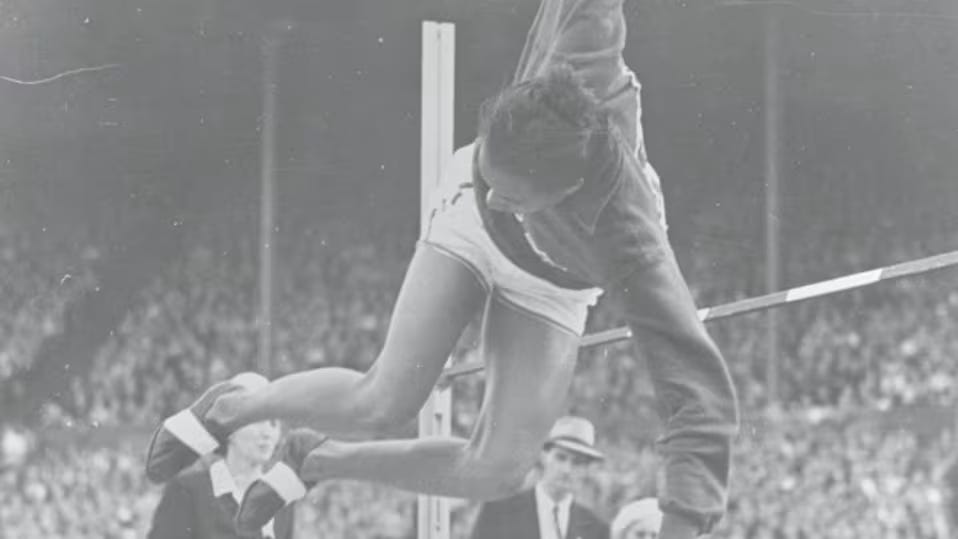
Despite people telling her to try out for the Olympics, in both 1940 and 1944 the games were called off due to World War II. and in 1946 Alice graduated from the Tuskegee Institute with a degree in dressmaking.
In 1948 the Olympics were back, yet Alice was still reluctant to try out for the team, but with encouragement she attended the trials and with a back injury she still destroyed the existing US high jump record.
In August 1948 on a rainy afternoon at Wembley Stadium in London, Alice aged 24, competed for her Olympic gold in the high jump. Audrey Patterson won the bronze medal in the 200m dash, the day before Alice was set to compete making her the first African-American woman to win a medal at the Olympics. So in front of 83,000 spectators Alice rose to the challenge set by her teammate.
Alice was competing against Great Britain's Dorothy Taylor who, in 1939 broke the world record in the high jump with a jump of 1.66m (around 5 feet 4 inches). Both Alice and Dorothy cleared the 5 feet 6 1/8-inch bar (around 1.7m) but only Alice had cleared the bar on her first attempt making her the gold medallist. It was a new Olympic record. Alice didn’t realise that she had won, saying;
“I saw it on the board, ‘A. Coachman, U.S.A., Number One, I went on, stood up there, and they started playing the national anthem. It was wonderful to hear.”
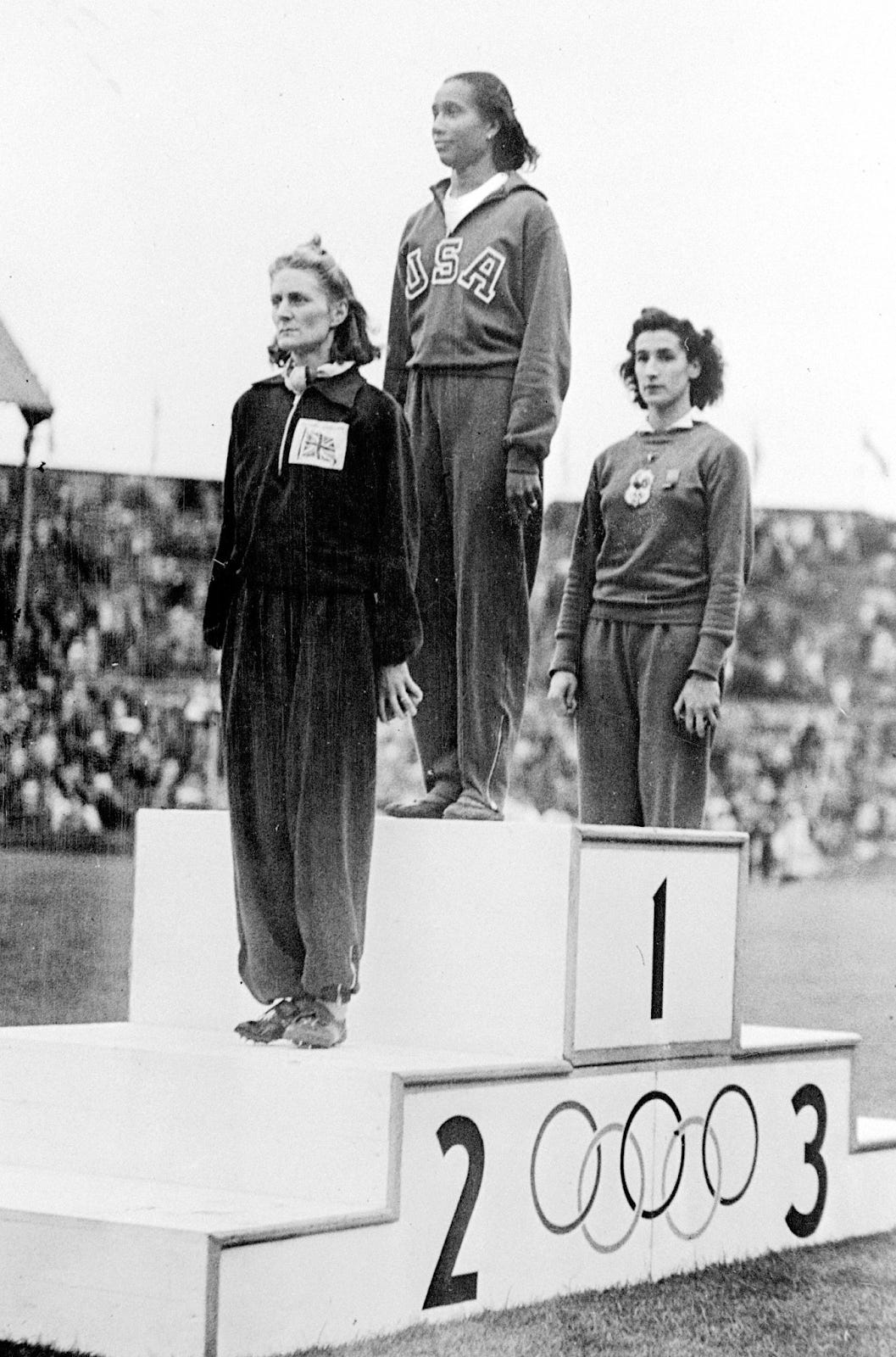
King George VI of Great Britain put the gold medal around her neck and with her achievement she became not only the first Black woman to win Olympic gold, but the only American woman to win a gold medal at the 1948 Olympic Games.
On her return to the United States, she was celebrated. Count Basie, the famous jazz musician, threw her a party. President Truman congratulated her and she also got a 175-mile motorcade from Atlanta to Albany and an “Alice Coachman Day” in Georgia to celebrate her accomplishment.
Sadly, her celebrations were still marred by segregation. In the Albany auditorium (her hometown), where she was honoured, whites and African Americans had to sit separately and the Mayor of Albany (a white man), sat on the stage with Alice but refused to shake her hand and she was still forced to leave her own celebration by a side door.
Following the 1948 Olympics, Alice’s track career came to an end. She completed her degree at Albany State College (now University), where she had enrolled in 1947, graduating with a B.S. in Home Economics and a minor in science in 1949 before becoming an elementary and high school teacher and track coach.
She married N.F. Davis and the couple had two children with him before their divorce. Alice married again, this time to Frank Davis and the pair were together until Frank’s death just a few years before her own.
While her athletic career had ended this did not stop Alice being remembered for her achievements or making yet more records. In 1952, Alice became the first Black female athlete to endorse an international consumer brand, Coca Cola. She was also inducted into nine halls of fame including the National Track-and-Field Hall of Fame (1975) and the U.S. Olympic & Paralympic Hall of Fame (2004). Then in 1994, Alice started the Alice Coachman Track and Field Foundation to aid young athletes and former competitors in financial need.
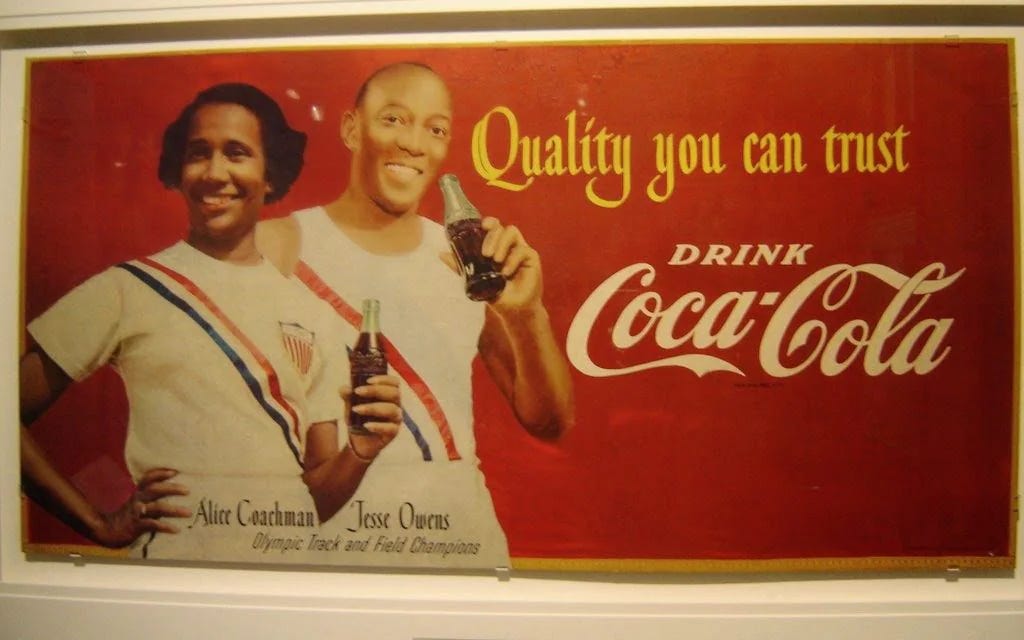
Coca Cola Advertising - Image from The Telegraph UK
Alice was not only the first Black woman to win a gold medal at the Olympics but she was also an inspiration to many, reminding them that “when the going gets tough and you feel like throwing your hands in the air, listen to that voice that tell you ‘Keep going. Hang in there.’...Guts and determination will pull you through.”
Alice Coachman passed away on July 14, 2014 at the age of 90.
Author- Emily Brown
Sources:
https://www.womenshistory.org/education-resources/biographies/alice-coachman
https://olympics.com/en/news/alice-coachman-athletics
https://usopm.org/alice-coachman/
https://www.nytimes.com/2014/07/15/sports/alice-coachman-90-dies-groundbreaking-medalist.html?ref=oembed