
Olympe de Gouges
Olympe de Gouges was an author, playwright and social reformer who “...challenged conventional views on women's rights and abolitionism…” and is often listed amongst the world’s first feminists. However, her outspoken beliefs led to her being executed by guillotine in 1793.
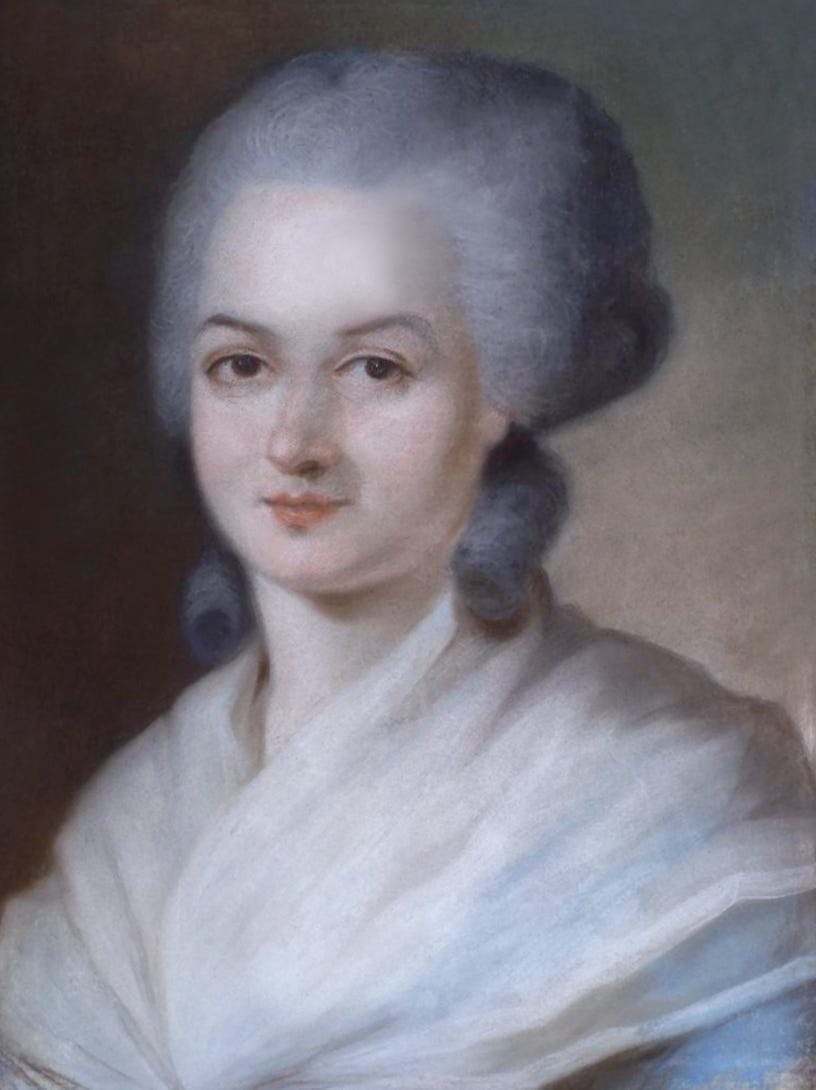
(Portrait of Olympes de Gouges (1748–1793) - By Alexander Kucharsky from:https://commons.wikimedia.org/wiki/File:Olympe_de_Gouges.png)
Marie Gouze was born on the 7th of May 1748 in Montauban, in southwestern France, she was one of four children born to Anne Olympe Mouisset Gouze. Whilst we know the name of her mother with certainty, the identity of her father is debated, with three possibilities are put forward;
Her mother's husband, Pierre Gouze. Although he is legally recognised as her father, he didn’t attend her baptism.
Jean-Jacques Lefranc, Marquis de Pompignan. Some believe Marie leaned into the rumour as a way to “...raise her prestige and social standing when she moved to Paris.” Whilst contemporary politician Jean-Babtiste Poncet-Delpech suggested, "...all of Montauban knew that Pompignan was Gouze's father.”
The eighteenth century saw rumours suggesting her father was Louis XV, but most agree there is no truth to the rumour.
Although born into a wealthy family, Marie had no actual formal education herself and was reportedly illiterate, dictating her writings to a secretary. On the 24th October 1765 Marie married Louis Yves Aubry, a caterer, who used his wife’s wealth to open his own business. Marie gave birth to her only child, a son named Pierre Aubry on the 29th of August 1766. It was an unhappy marriage in her semi-autobiographical novel, ‘Mémoires’ she wrote:
"I was married to a man I did not love and who was neither rich nor well-born. I was sacrificed for no reason that could make up for the repugnance I felt for this man."
Louis was killed when the river Tarn flooded in November, 1766. Although she had other romantic relationships with men, Marie never remarried calling the institution of marriage "the tomb of trust and love". It was after her husband's death she changed her name to Olympe de Gouges.
Olympe began a relationship with Jacques Biétrix de Rozières, a wealthy businessman from Lyon, who in 1768 funded her move to Paris. The allowance given to her by Jacques, allowed Olympe to socialise “...in fashionable society,” where she formed friendships with Madame de Montesson and Louis Philippe II, Duke of Orléans. Whilst attending the artistic and philosophical salons of Paris, she met many writers, including La Harpe, Mercier, and Chamfort, as well as future politicians such as Brissot and Condorcet.
It was in Paris that Olympe began her writing career, publishing her debut novel in 1784 followed by a number of plays and pamphlets. As a passionate advocate of human rights, she was one of France's earliest public opponents of slavery, and wrote on a variety of issues including divorce and marriage, children's rights, unemployment and social security. She came to the public's attention with the play L'Esclavage des Noirs, (“Slavery of Blacks”) which was staged at the famous Comédie-Française in 1785. Owing to her anti-slavery stance and the crime of being a woman with an opinion Olympe was subject to attack by those such as a Abraham-Joseph Bénard who remarked:
"Mme de Gouges is one of those women to whom one feels like giving razor blades as a present, who through their pretensions lose the charming qualities of their sex... Every woman author is in a false position, regardless of her talent."
Not one to take the criticism of a man, she replied;
"I'm determined to be a success, and I'll do it in spite of my enemies."
In the face of a press campaign launched by the Slave trade lobby she had to take legal action to force Comédie-Française to stage her play, however, despite her victory, the play closed after just three performances as the lobby paid hecklers to sabotage the performances.
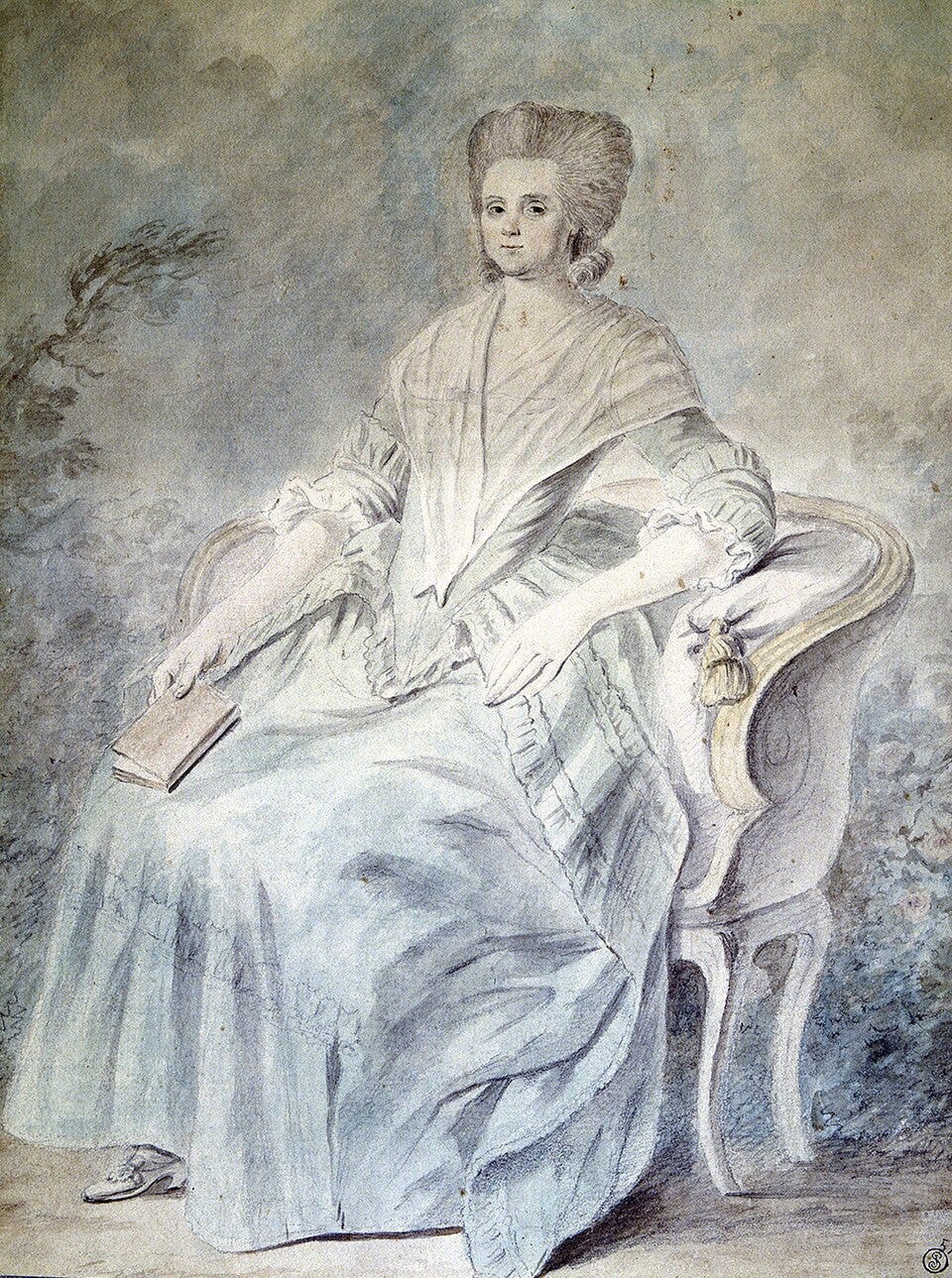
(Marie Olympe de Gouges, veuve Aubry (1748-1793) Artist unknown - From: https://commons.wikimedia.org/wiki/File:Olympe_de_Gouges.jpg)
As an advocate for human rights Olympe; “...greeted the outbreak of the Revolution with hope and joy, but soon became disenchanted when equal rights were not extended to women.” Influenced and inspired by John Locke's treatises on natural rights, she became part of the ‘Society of the Friends of Truth’, an association with “...the goal of establishing equal political and legal rights for women.” In response to the Declaration of the Rights of Man and of the Citizen, she wrote the Déclaration des droits de la Femme et de la Citoyenne ("Declaration of the Rights of Woman and of the Female Citizen"). In which her famous statement: “A woman has the right to mount the scaffold. She must possess equally the right to mount the speaker's platform” first appeared. Her next work ‘Contrat Social’ proposed marriage based upon gender equality.
Olympie opposed the execution of Louis XVI, “...partly out of opposition to capital punishment and partly because she favoured constitutional monarchy.” Her opinion drew the anger of many hard-line republicans, whom she further upset when in December 1792, she wrote to the National Assembly offering to defend the king who was about to be put on trial. In her letter she argued; ”...that he was guilty as a king, but innocent as a man, and that he should be exiled rather than executed.” As the Revolution progressed, Olympie became more and more outspoken, in her work Les Trois urnes, ou le Salut de la Patrie, par un voyageur aérien (The Three Urns, or the Salvation of the Fatherland, by an Aerial Traveller) she wrote:
"Now is the time to establish a decent government whose energy comes from the strength of its laws; now is the time to put a stop to assassinations and the suffering they cause, for merely holding opposing views. Let everyone examine their consciences; let them see the incalculable harm caused by such a long-lasting division...and then everyone can pronounce freely on the government of their choice. The majority must carry the day. It is time for death to rest and for anarchy to return to the underworld."
Olympe called for an end to the bloodshed of the Revolution saying:
"It is time to put a stop to this cruel war that has only swallowed up your treasure and harvested the most brilliant of your young. Blood, alas, has flowed far too freely!" and warned that: "The divided French... are fighting for three opposing governments; like warring brothers they rush to their downfall and, if I do not halt them, they will soon imitate the Thebans, ending up by slitting each others throats to the last man standing."
This was the final straw for those in power and she was arrested on the 20th of July, 1793.
After Olympe was arrested her house was searched for evidence, when none was found, she voluntarily led them to the storehouse where she kept her papers, among which was an unfinished play titled La France Sauvée ou le Tyran Détroné (France Preserved, or The Tyrant Dethroned). In the first act, which is all that survives, Marie-Antoinette is planning defence strategies to retain the crumbling monarchy and is confronted by revolutionary forces, including de Gouges herself. The play was used by both sides during her trial; the prosecutor claimed her depictions of the queen threatened “...to stir up sympathy and support for the Royalists.” Olympe, who was representing herself, countered that the play showed that she had always been a supporter of the Revolution. Thanks to her friends she was able to publish two texts: Olympe de Gouges au tribunal révolutionnaire (Olympe de Gouges at the Revolutionary tribunal), in which she related her interrogations; and Une patriote persécutée (A [female] patriot persecuted), in which she condemned the Terror.
On the 3rd of November, 1793 the Revolutionary Tribunal sentenced her to death and she was executed for seditious behaviour and attempting to reinstate the monarchy. After her execution her body was disposed of in the Madeleine Cemetery. Olympe's last moments were depicted by an anonymous Parisian who kept a chronicle of events:
“Yesterday, at seven o'clock in the evening, a most extraordinary person called Olympe de Gouges who held the imposing title of woman of letters, was taken to the scaffold, while all of Paris, while admiring her beauty, knew that she didn't even know her alphabet... She approached the scaffold with a calm and serene expression on her face, and forced the guillotine's furies, which had driven her to this place of torture, to admit that such courage and beauty had never been seen before... That woman... had thrown herself in the Revolution, body and soul. But having quickly perceived how atrocious the system adopted by the Jacobins was, she chose to retrace her steps. She attempted to unmask the villains through the literary productions which she had printed and put up. They never forgave her, and she paid for her carelessness with her head.”
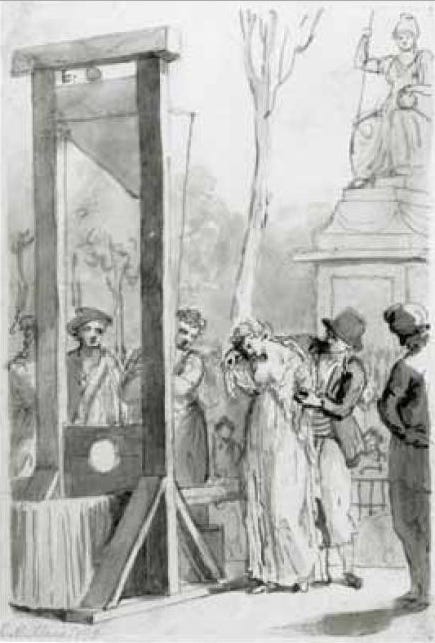
(Exécution d'Olympe de Gouges - By Mettais. From:File:Olympe de Gouges.png - Wikimedia Commons)
Olympie’s execution was used as a warning to other women who were politically active, after her execution she was cast by her enemies as “...an enemy of the natural order, and thus enemy of the ruling Jacobin party.” Yet she inspired others including Mary Wollstonecraft and American women who wanted the vote. Whilst she was a celebrity in her lifetime, she became lost to history, until the mid-1980s when her story was rediscovered through a political biography by Olivier Blanc.
Olympe was a prolific writer who “...charged into the contemporary political controversies and was often in the vanguard.” Today, she is honoured in many street names across France and in 2007 French presidential contender Ségolène Royal expressed the wish that de Gouges's remains be moved to the Panthéon. As nice as this would be, her remains and many of those executed during the Reign of Terror “...have been lost through burial in communal graves.”
Olympe was unafraid to speak her mind or stand up for those who had little to no rights. She should be remembered and celebrated for her bravery.
Author - Gemma Apps
Sources:
Olympe de Gouges | Biography, Declaration of the Rights of Women, Beliefs, Death, & Facts | Britannica
Declaration of the Rights of Woman and of the Female Citizen - Wikipedia
Biography of Olympe de Gouges, French Activist (thoughtco.com)
Olympe de Gouges, The Declaration of the Rights of Woman (September 1791) | World History Commons
The Declaration of the Rights of Women by Olympe de Gouges
File:Olympe d
e Gouges.png - Wikimedia Commons